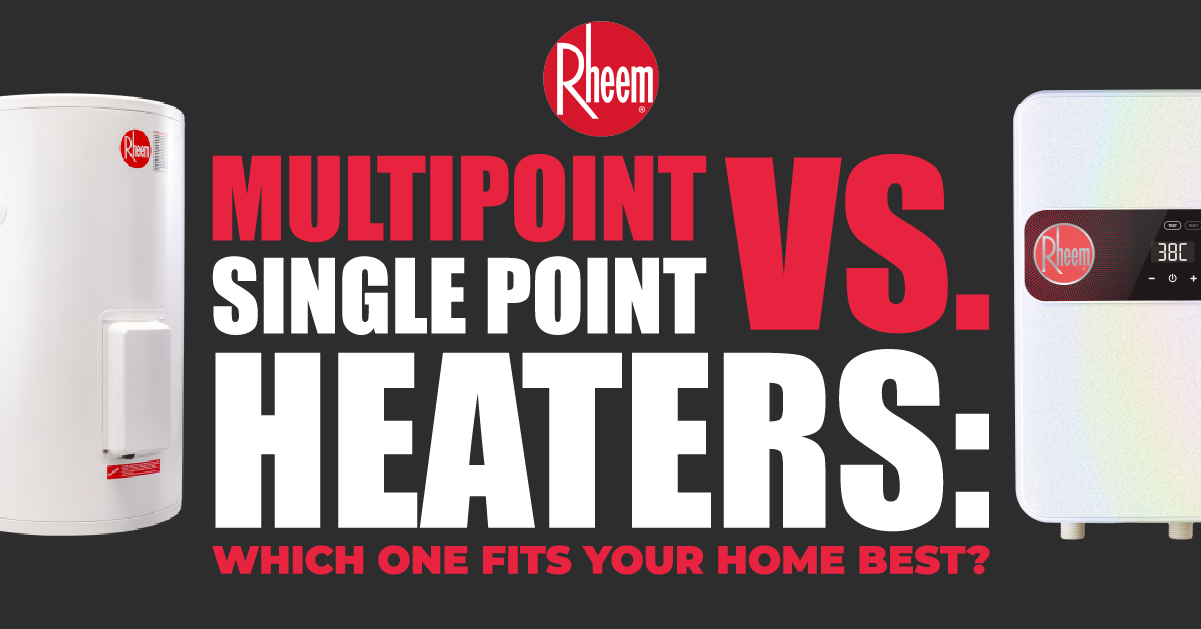
Multipoint vs. Single Point Heaters: Which One Fits Your Home Best?
courtney | Friday May 15, 2026
Warm water plays a crucial role in ensuring everyday comfort at home, especially during busy mornings. Since residential properties have different water-heating needs, many homeowners compare multi-point and single-point heaters before deciding which to install.
Both options provide reliable warm water, but they work differently and suit different home setups. Understanding how each system works can help you choose a heater that fits your space, household size, and daily routine.
Key Takeaway
In this blog, you’ll learn:
- The difference between single-point and multipoint heaters
- Where each type is commonly used at home
- The main benefits of each system
- How to choose the right heater based on your space and usage
Single Point Water Heaters
A single-point water heater supplies warm water to one outlet only, to a shower. This type of water heater commonly features a built-in temperature control, allowing it to connect directly to a shower area. Owners can also adjust temperature using the heater’s dial or electronic panel, ensuring that preferred temperature is achieved when used.
Its compact design and lack of complex setup make it space efficient and installation much simpler, ideal for families living in condos, studio units, or small households.
Benefits of Single Point Heaters
- Simple installation. The heater connects directly to one shower, which means installation is easier and faster compared to larger systems.
- Compact size. Most units are small and wall-mounted, making them ideal for condo bathrooms where space is usually limited.
- Easy maintenance. With less working components and a straightforward design, single point heating units allow for efficient cleaning and repair.
Multipoint Water Heaters
A multipoint water heater supplies warm water to multiple outlets and is installed in one central location and distributes warm water across several water tap points. Purchasing a multipoint heater also requires investing in a mixer valve, which blends cold and hot water at each outlet, allowing users to easily adjust the temperature to their preference.
This setup is often used in condo units or homes with several bathrooms as one system can serve multiple outlets while keeping walls less crowded.
Pros of Multipoint Heaters
- Supplies multiple outlets. Warm water can be used in different water points at the same time, making it ideal for families with busy morning routines.
- Saves wall space. Since the unit is installed in one location, there is no need to mount heaters in multiple bathrooms.
- Cleaner bathroom layout. Fewer visible units create a more organized and less cluttered space.
Differences Between Multipoint and Single Point Heaters
Coverage and Usage
Single-point heaters supply warm water to only one outlet, such as a shower, making them more suitable for small units or homes with a single bathroom.
On the other hand, multipoint heating units can supply warm water to multiple outlets at the same time. This setup works better for larger households or homes with several bathrooms.
Installation Setup
Single-point units are installed near the waterpoint they serve, resulting in a simple and direct setup process. However, homes with multiple bathrooms may need more than one unit to cater to the demand.
Meanwhile, multipoint heating units and its mixer valve are installed in a central location and connected to multiple faucets or taps. This reduces the number of units installed around the home and keeps the setup more streamlined.
Space and Layout
Space is an important consideration when investing in water heaters, especially for those living in condo units.
While single-point heaters are compact, multiple bathrooms may still require several units installed on different walls. Meanwhile. multipoint systems only require one main unit and one mixer valve installed in a fixed location, saving wall space and maintaining a cleaner, more organized look.
Cost and Long-Term Use
Single-point heaters offer lower upfront costs and reduced operating expenses, owing to simpler upkeep requirements and fewer moving parts. In contrast, multipoint systems typically require a higher initial investment as buyers need to invest on the water heater, the mixer valve, and the wiring required to operate the system. However, maintenance and repair cost is not much difference from single-point heaters.
Upgrade to the Right Water Heating Solution
Understanding the difference between single-point and multipoint systems makes it easier for homeowners to choose a water-heating system that fits their space and lifestyle. While both options provide reliable warm water, the best choice depends on how many outlets need support and how much space is available at home.
Are you looking for one of the most trusted water heater brands that offer reliable, safe units for residential use? Rheem Philippines offers a range of water heating solutions designed for different household setups, including both single-point and multipoint systems.
You can browse our extensive range of single-point and multipoint heaters on our website. For any inquiries or more information about our products, you can also talk to one of our representatives at www.rheemphilippines.com/contact.